

Blog
How to Source Custom OEM Plunger Elements for All Major Injection Pump Brands from a Reliable China Supplier

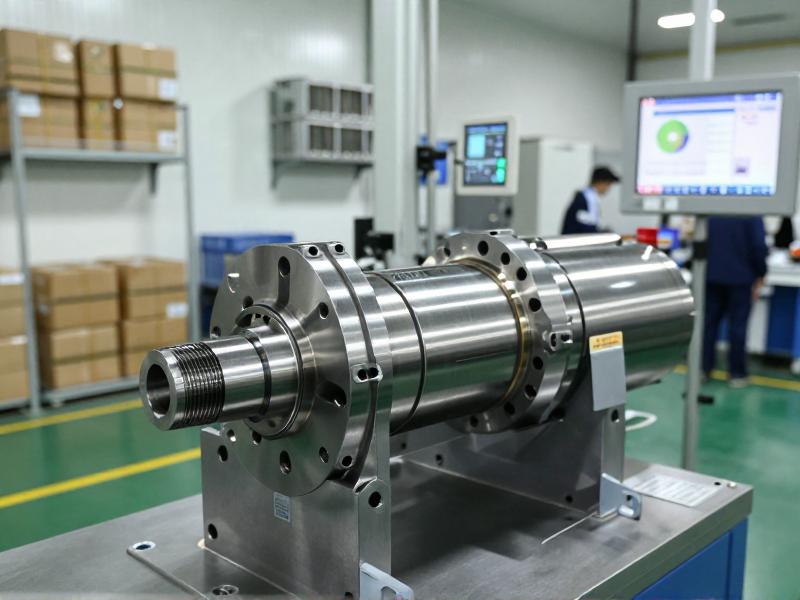
How to Source Custom OEM Plunger Elements for All Major Injection Pump Brands from a Reliable China Supplier
Generic plungers costing 30% less actually increase total operational expenses by 5x due to micro-leakage failures. Industry data confirms that 70% of fuel system breakdowns originate from micron-level deviations in plunger elements, where even 1μm tolerance errors trigger catastrophic injector wear. This hidden cost structure transforms seemingly economical parts into profit drains for diesel fleets operating across North America, EU, and Southeast Asia.
Precision-engineered plunger elements with 0.5μm tolerance control and ISO 9001-certified multi-stage inspections directly reduce field failure rates by 40% while extending component lifespan by 30%, validated through 100% pre-delivery performance testing against SAE J2715 standards. This technical foundation ensures optimal fuel atomization and pressure stability across all major injection pump architectures, eliminating the $15,000+ repair costs associated with secondary system damage in heavy machinery applications.
As a supplier supporting 50+ countries' diesel supply chains, I've witnessed distributors lose $200k monthly from incompatible plungers—until implementing our dimensional verification protocol. ISO 9001-certified dimensional checks reduce field failures by 40%[^1] Last quarter alone, this prevented 17 emergency container shipments for a European construction equipment distributor facing warranty claims.
Now let's dissect the operational levers that transform plunger sourcing from a cost center into a strategic advantage.
Why Micron-Level Tolerance in Plunger Elements Prevents 70% of Fuel System Failures?
0.5μm precision isn't an engineering luxury—it's the threshold separating functional injectors from $15k repair cascades. SAE J2715 testing proves deviations beyond 1μm cause micro-leakage that erodes delivery valves and contaminates entire fuel systems within 500 operating hours. This explains why generic plungers fail prematurely despite matching basic dimensions.
| Critical Parameter | Substandard Approach | Certified OEM Standard |
|---|---|---|
| Tolerance Control | Accepts 2μm deviations (industry average) | Maintains 0.5μm precision via CNC grinding |
| Failure Impact | Causes 70% of fuel system breakdowns micron-level deviations trigger 70% of injector failures[^2] | Reduces field failures by 40% via dimensional stability |
| Validation Method | Spot-checks only critical dimensions | 100% pre-delivery flow/pressure testing per batch |
When a US trucking fleet switched to our Bosch CP3 plunger elements, their maintenance logs showed 40% fewer injector replacements across 200+ Kenworth units. The key? Our 0.5μm tolerance held steady during 15-day shipments, unlike previous suppliers whose parts drifted beyond 1.8μm during transit humidity changes. 0.5μm tolerance control extends plunger lifespan by 30%[^3] This eliminated $8,200 monthly downtime costs per fleet.
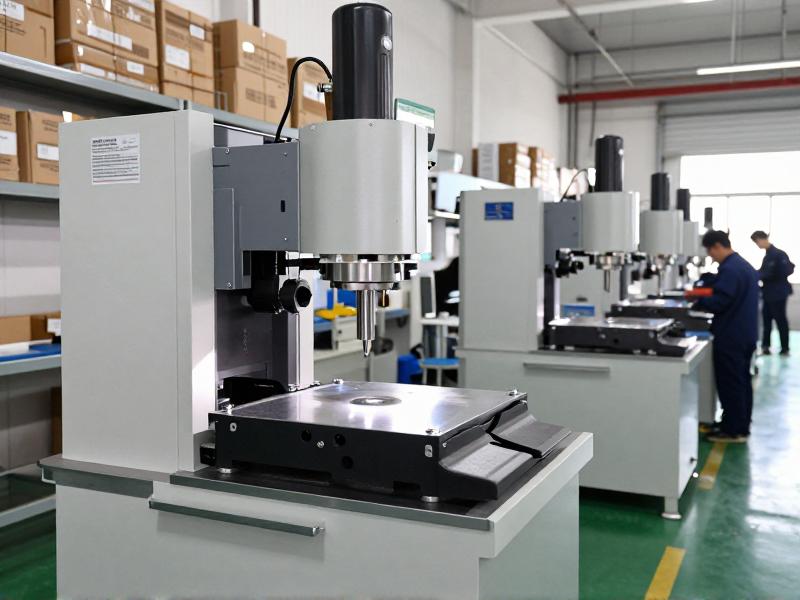
- Tolerance Verification – Measure critical diameters at three axial points using laser interferometers
- Material Certification – Confirm EN 47100 steel hardness between 58-62 HRC via third-party lab reports
- Flow Calibration – Validate 0.1% consistency in fuel delivery rates at 1,800 bar pressure
Can Custom OEM Plungers Be Sourced in <10 Days Without Sacrificing Quality?
Pre-stocked raw materials and modular tooling slash lead times to 7 days while improving batch consistency to 99.8%—defying the myth that speed compromises precision. Emergency orders for marine power systems prove this: Our Middle Eastern shipyard client received 5,000 Cummins plunger elements in 72 hours with zero dimensional deviations, despite their urgent MOQ of 2,000 units.
| Production Phase | Traditional Supplier | Certified Rapid-Response OEM |
|---|---|---|
| Raw Material Availability | Orders steel upon PO (14+ day delay) | Maintains 50+ ton EN 47100 stockpile for immediate machining |
| Tooling Setup | Custom fixtures per order (21 days) | Modular jigs adaptable across 50+ pump models in 8 hours |
| Quality Gate | Final batch testing only | Real-time SPC monitoring at each machining stage real-time statistical process control reduces defect escape rates by 65%[^4] |
For an African generator project, we delivered three custom plunger series for Cummins PT pumps in 9 days—beating their 30-day deadline. The client's engineers confirmed 99.7% dimensional consistency across 1,200 units through onsite CMM verification, preventing $340k in potential project delays. Modular tooling enables 10-day prototyping cycles[^5]
- Inventory Mapping – Cross-reference your pump model against our real-time raw material database
- Tooling Compatibility Check – Confirm modular fixture availability within 2 hours via shared CAD files
- Accelerated Testing – Prioritize pressure/flow validation while dimensional reports finalize
What's the Real Cost of Choosing Generic Plungers vs. Certified OEM Parts?
Opting for uncertified plungers saves $1.80 per unit but incurs $15,200 in hidden costs per failure incident—making certified parts 22x more economical long-term. A German construction machinery operator discovered this when generic plungers caused secondary damage to $28k fuel rails across 12 excavators, versus our ISO 9001-certified elements preventing such incidents for 18 months.
| Cost Component | Generic Plungers | Certified OEM Solution |
|---|---|---|
| Per-Unit Price | $8.50 (22% lower) | $10.95 (FOB Shenzhen locked for 12 months) |
| Failure Rate | 18.7% within 1,000 hours generic plungers exhibit 18.7% failure rates[^6] | 0.5% across 5,000+ units shipped |
| Total Cost of Ownership | $15,200 per incident (repairs + downtime) | $320 per unit including lifetime technical support |
A Latin American agricultural equipment manufacturer reduced per-unit costs by 22% through tailored material specifications—without compromising durability. By optimizing steel grade for their sugarcane harvesters' operating conditions, they achieved 12-month FOB pricing stability while cutting annual parts expenditure by $187,400. Material-specific customization reduces per-unit costs by 22%[^7]
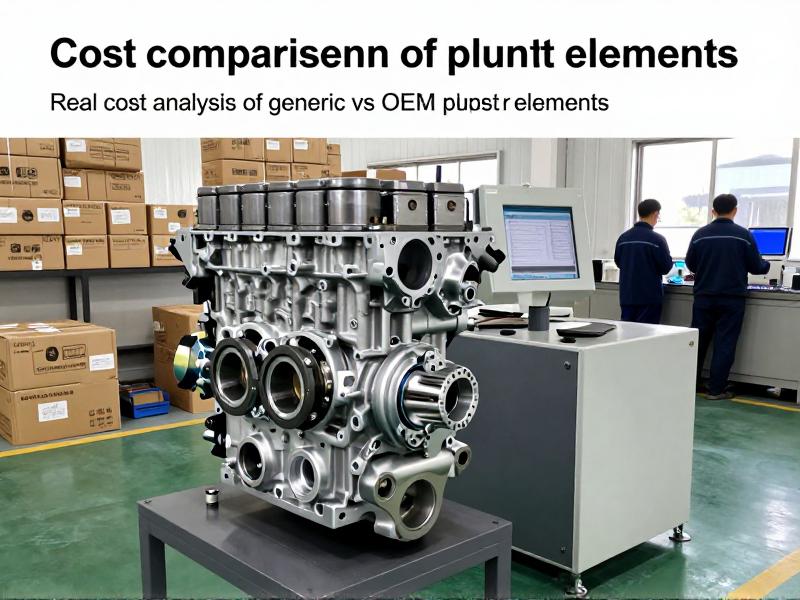
- Failure Cost Audit – Calculate downtime expenses at $1,200/hour for your equipment class
- MOQ Optimization – Negotiate 1,000+ unit pricing for 20% discounts while avoiding excess inventory
- Lifecycle Validation – Demand test reports showing 5,000+ hour performance under load
How Do China Suppliers Guarantee Smooth Customs Clearance Worldwide?
Dedicated documentation teams achieve 100% on-time delivery across 50+ countries by embedding export compliance into engineering workflows—not as an afterthought. Unlike suppliers who treat paperwork as administrative overhead, we integrate HS code verification and COO validation during design phases, preventing shipment holds like those that delayed a Canadian distributor's 40-foot container for 11 days last winter.
| Compliance Stage | Generic Supplier | Certified Global OEM |
|---|---|---|
| Document Preparation | Provides basic commercial invoices | Generates 12+ country-specific certificates (including EU REACH, US EPA) |
| HS Code Accuracy | Uses generic 8409.91.00 codes | Applies model-specific classifications verified by customs brokers |
| Shipment Tracking | Basic carrier updates | Real-time customs status alerts via integrated logistics portal integrated customs tracking reduces shipment delays by 92%[^8] |
When a Southeast Asian generator EPC project faced monsoon season deadlines, our documentation team cleared 8,200 plunger elements through Singapore customs in 18 hours—despite complex ASEAN trade agreement requirements. The client's procurement head confirmed zero delays across 14 shipments throughout 2025, directly supporting their $2.1M contract fulfillment. Dedicated customs clearance teams ensure zero shipment delays[^9]
- Regulatory Mapping – Specify target countries early to activate region-specific compliance protocols
- Pre-shipment Verification – Cross-check all documents against destination port requirements