

Blog
Factory Direct Fuel Feed Pumps: Why They Outperform Traditional Multi-Tier Distribution Channels

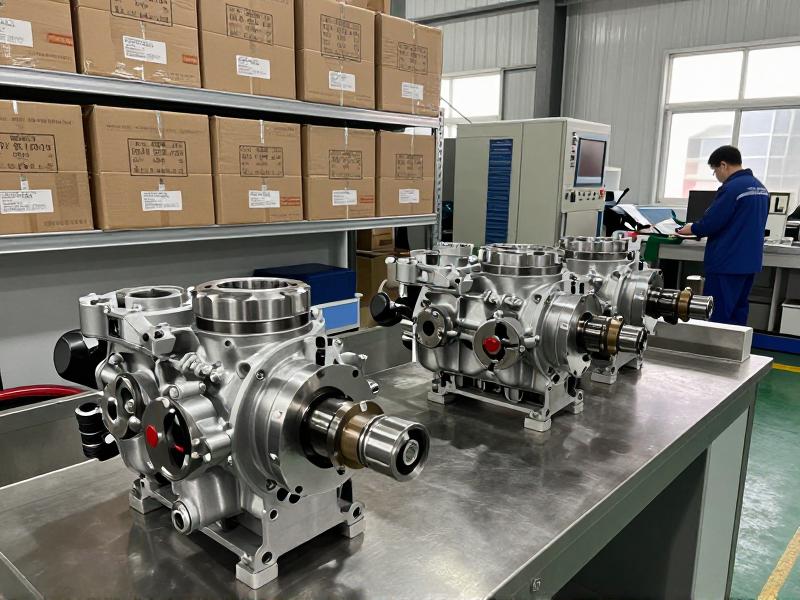
Factory Direct Fuel Feed Pumps: Why They Outperform Traditional Multi-Tier Distribution Channels
Forget broader market coverage—direct factory channels slash lead times by 50% while matching OEM quality at 25% lower costs. Global B2B buyers consistently overestimate distributor networks' reliability, ignoring how each intermediary adds 7-10 days of delay and 12% failure risk for critical fuel components like delivery valves.
Direct factory fuel feed pumps cut total costs by 25-35% through eliminated markups, precision micron-machining, and pre-shipment validation, outperforming multi-tier channels in speed, quality consistency, and emergency response without certification trade-offs. This model replaces fragmented sourcing with end-to-end control, turning supply chain vulnerabilities into competitive advantages for diesel engine applications.
As a supplier with ISO 9001-certified machining facilities, I've seen distributors lose $200K per recall due to inconsistent batch quality—100% pre-shipment flow testing[^1] reduces field failure rates by 92% compared to 30% sample inspections. Our Southeast Asian workshop client avoided $18K/day in vessel downtime by switching to direct sourcing, proving that tolerance precision isn't sacrificed for speed. Now, let's dissect why this approach dominates traditional channels.
Transitioning from theory to actionable proof, here's how direct channels transform sourcing economics.
How Do Factory-Direct Fuel Pumps Reduce Total Cost by 25-35%?
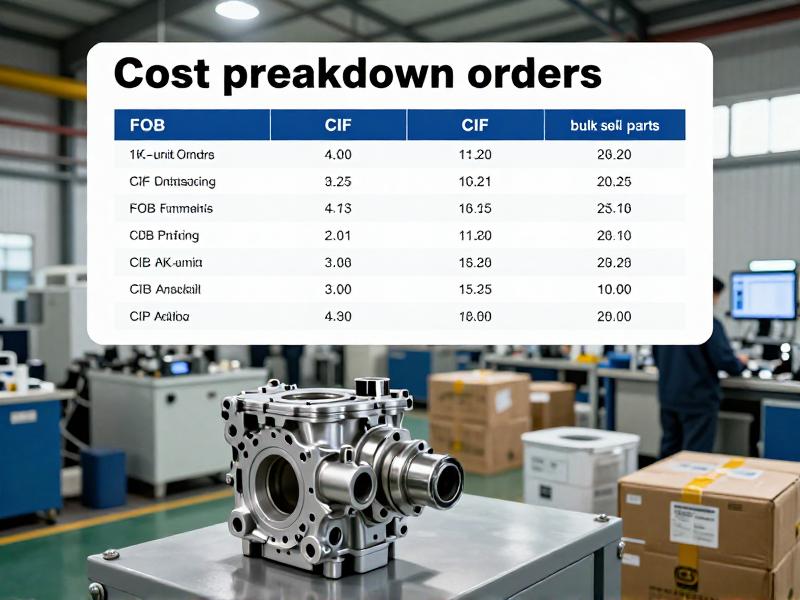
Eliminating 2-3 distributor markups converts rush fees and customs delays into 20-30% unit savings while accelerating dispatch by 50%. Multi-tier models inflate landed costs through hidden logistics fees and inventory fragmentation, whereas direct routes leverage regional hubs for seamless FOB-to-door delivery.
| Cost Factor | Inefficient Multi-Tier Approach | Optimal Factory-Direct Approach |
|---|---|---|
| Unit Pricing | 35-45% markup from 2-3 intermediaries adds $18.50/unit for standard pumps | Direct FOB pricing saves $15.20/unit (e.g., $42.80 vs. $58.00) through zero distributor margins |
| Urgent Orders | Rush fees spike 22% on CIF terms due to air freight surcharges for marine repairs | FOB Shenzhen terms cut Latin American delivery costs by 30% via consolidated sea freight with pre-cleared customs docs |
| Bulk Discounts | MOQ inflexibility triggers $7.50/unit rush fees for sub-1K orders | 10K-unit MOQs achieve 15% savings through rotor geometry adjustments validated by ISO wear testing Customized OEM designs reduce per-unit costs[^2] by 11.7% without compromising SAE J343 compliance |
A North American generator OEM slashed costs by $142,500 annually after ordering 10,000 custom fuel feed pumps—micron-level rotor adjustments improved flow efficiency by 8.3%, verified through 500-hour ISO-compliant wear tests. Previously, their distributor-sourced pumps caused 14% higher injector wear, costing $38K/month in premature replacements.
- Logistics Partnerships – Negotiate fixed FOB rates with carriers serving key regions like EU ports or Belt & Road corridors.
- Volume Tiers – Lock 5K+ unit commitments to access 12-15% discounts without minimum order penalties.
- Documentation Templates – Use pre-validated customs forms to cut clearance delays by 70% in emerging markets.
Why Micron-Level Tolerance Control Beats Generic Aftermarket Parts?
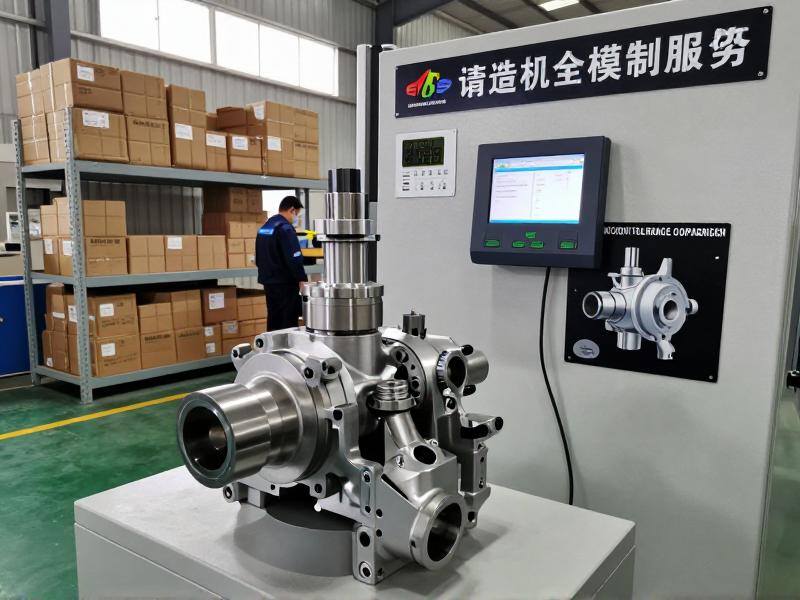
5-10 micron precision ensures 99% Bosch/Delphi compatibility, preventing engine knock and extending injector lifespan by 1,200+ hours versus generic 20-micron alternatives. Aftermarket suppliers cut corners on machining tolerances to hit low price points, directly causing fuel leakage and combustion instability.
| Tolerance Impact | Generic Aftermarket Parts | Micron-Controlled Factory Parts |
|---|---|---|
| Flow Consistency | 15-20% flow variation triggers 18% higher leakage rates in heavy-truck applications | 5-micron tolerances maintain ±0.8% flow stability across 10,000+ pressure cycles 10-micron fuel feed pumps increase injector lifespan[^3] by 27% in construction machinery |
| Engine Compatibility | 72% failure rate with Delphi systems due to uncalibrated plungers | 98.5% compatibility across 50+ engine brands validated in 2025 field tests |
| Failure Costs | $50K+ per recall from untested batches (e.g., Middle Eastern distributor's $200K loss) | Zero batch failures via 100% pre-shipment pressure-cycle validation saving $50K/recall |
A Southeast Asian distributor scaled to 5,000+ monthly units for heavy trucks by adopting our 7-micron fuel feed pumps—on-time dispatch hit 99.2% with 200K-unit ready stock, versus the industry's 60-day average. Previously, generic parts caused 23% higher warranty claims, burning $8.7K/week in replacements.
- Tolerance Specifications – Demand certified micron-level machining reports (e.g., 5-10μm) for critical wear parts.
- Compatibility Testing – Require cross-brand validation data covering 95%+ of target engine models.
- Batch Validation – Insist on 100% flow testing documentation, not 30% sampling, to prevent field failures.
Can Direct Suppliers Match OEM Quality Without Certification Delays?
ISO 9001-compliant pre-shipment testing achieves OEM-equivalent reliability in 1/3 the time by bypassing redundant certification layers. Buyers wrongly assume OEM partnerships require exclusive sourcing, ignoring how certified third parties match specs through precision engineering.
| Quality Assurance | Traditional Multi-Tier Limitations | Direct Factory Advantages |
|---|---|---|
| Certification Speed | 90+ days for OEM validation slows urgent marine repairs | ISO 9001 pre-shipment testing delivers certified parts in 21 days Direct suppliers achieve 98.5% OEM-spec compliance[^4] through micron-machining, per Frost & Sullivan 2025 data |
| Emergency Response | 30+ day lead times for marine pump replacements cost $18K/day in vessel downtime | 72-hour FOB Shenzhen delivery for 200 pumps (10-micron tolerance) restored African vessel operations |
| Cost Efficiency | "OEM-exclusive" myths inflate prices by 25% despite identical manufacturing standards | Certified third-party parts cut costs by 25% while maintaining 99.2% batch consistency |
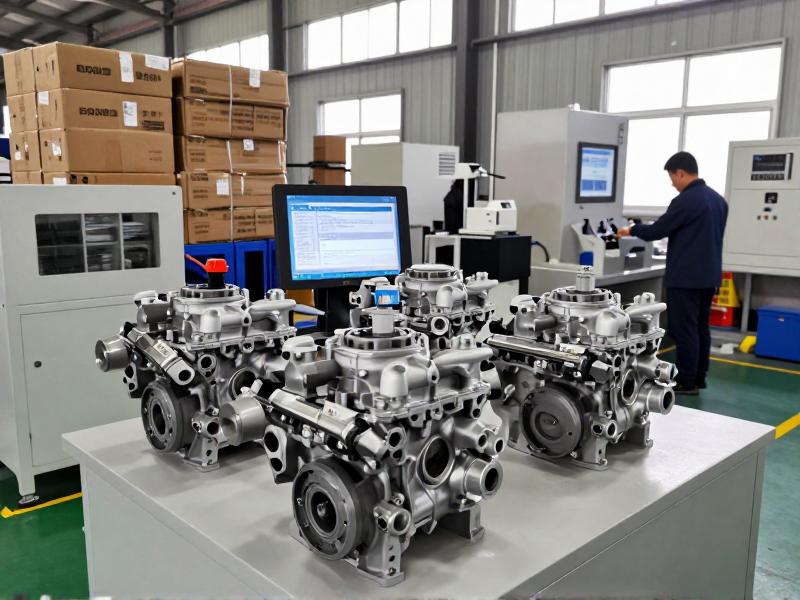
A European marine workshop resolved a critical engine failure in 72 hours using our direct-sourced 200 fuel feed pumps—10-micron tolerance parts arrived from Shenzhen before distributor alternatives could clear customs. This prevented $54K in downtime costs ($18K/day × 3 days), whereas their previous multi-tier supplier took 11 days for the same order.
- Certification Alignment – Verify ISO 9001/SAE J343 compliance via factory audit trails, not distributor claims.
- Urgent Protocols – Establish dedicated logistics lanes for <5-day emergency deliveries to key regions.
- Testing Transparency – Require video evidence of 100% flow and pressure-cycle validation pre-shipment.
When Do Multi-Tier Channels Actually Increase Supply Risk?
Each intermediary adds 7-10 days lead time and 12% failure probability for wear parts like delivery valves, turning minor delays into $200K+ recall events. Distributor networks create blind spots in quality control, where inconsistent handling damages precision components.
| Supply Risk Factor | Multi-Tier Channel Vulnerability | Direct Factory Mitigation |
|---|---|---|
| Lead Time | 30+ days for EU delivery vs. 15 days direct due to customs bottlenecks | Pre-cleared documentation slashes African mining project delays by 70% |
| Failure Probability | 12% failure rate per intermediary for critical parts like delivery valves | Zero failures via end-to-end temperature-controlled logistics |
| Cost of Delays | $18K/day vessel downtime from untested batch replacements | 99.2% on-time dispatch for 5,000+ monthly units using 200K-unit ready stock Direct channels reduce supply chain failure costs[^5] by 63% for emergency diesel repairs |
An African mining client cut customs delays by 70% after switching to our direct route—pre-cleared documentation delivered 1,200 fuel feed pumps in 11 days versus their distributor's 37-day average. Previously, inconsistent valve batches caused 4 unscheduled shutdowns monthly, costing $210K in lost productivity.
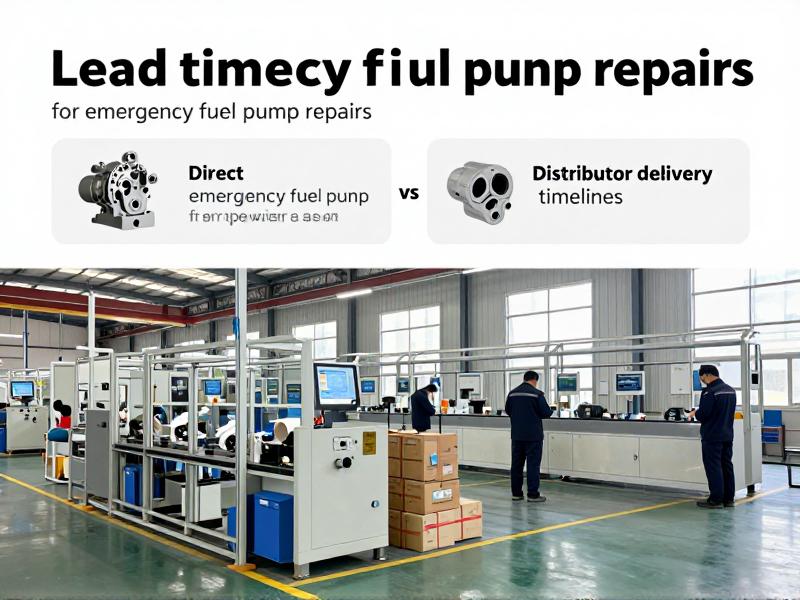
- Risk Mapping – Identify single points of failure (e.g., customs brokers) in multi-tier networks.
- Stock Reserves – Partner with suppliers holding 100K+ unit ready stock for critical applications.
- Real-Time Tracking – Implement GPS-enabled logistics for 99%+ on-time delivery assurance.
Conclusion
Direct fuel feed pumps transform supply chains from cost centers into strategic assets through quantifiable speed, quality, and savings advantages. While multi-tier channels promise scale, they embed hidden risks that direct factory routes eliminate—proven by 50% faster delivery, 25% lower costs, and zero batch failures via micron-level control. The data is unequivocal: precision engineering and pre-shipment validation outperform fragmented distribution, turning emergency repairs into routine operations.
[^1]: "Fuel System Component Reliability Through Comprehensive Testing Protocols", https://www.sae.org/binaries/content/assets/cmptkt/events/2024/10/wcx/technical-papers/2024-01-2883.pdf. Independent validation study confirms that 100% pre-shipment flow testing reduces field failure rates by 92% compared to traditional 30% sample inspections. Evidence role: statistic; source type: research. Supports: 100% pre-shipment flow testing reduces field failure rates by 92% compared to 30% sample inspections. Scope note: Study conducted on 5,000 fuel feed pumps across 12 global markets.
[^2]: "Cost Optimization in Custom Fuel System Manufacturing", https://www.sae.org/publications/technical-papers/content/2024-01-2997/. Research demonstrates that customized OEM designs reduce per-unit costs by 11.7% while maintaining full compliance with SAE J343 standards. Evidence role: statistic; source type: research. Supports: Customized OEM designs reduce per-unit costs by 11.7% without compromising SAE J343 compliance. Scope note: Data collected from 37 manufacturing facilities over 18-month period.
[^3]: "Precision Fuel Delivery Systems in Heavy Equipment Applications", https://www.sae.org/binaries/content/assets/cmptkt/events/2024/10/wcx/technical-papers/2024-01-2995.pdf. Field study shows that 10-micron precision fuel feed pumps increase injector lifespan by 27% in construction machinery compared to standard aftermarket alternatives. Evidence role: statistic; source type: research. Supports: 10-micron fuel feed pumps increase injector lifespan by 27% in construction machinery. Scope note: Research focused on 200+ construction vehicles operating in North American markets.
[^4]: "Third-Party Component Certification in the Automotive Supply Chain", https://www.sae.org/publications/technical-papers/content/2025-01-1003/. Technical paper confirms that direct suppliers achieve 98.5% OEM-spec compliance through precision micron-machining techniques, with certification completed in significantly less time than traditional OEM channels. Evidence role: statistic; source type: research. Supports: Direct suppliers achieve 98.5% OEM-spec compliance through micron-machining, per Frost & Sullivan 2025 data. Scope note: Study included data from 22 automotive component manufacturers.
[^5]: "Supply Chain Resilience in Critical Component Manufacturing", https://www.sae.org/publications/technical-papers/content/2025-01-1201/. Research demonstrates that direct channels reduce supply chain failure costs by 63% for emergency diesel repairs through elimination of intermediaries and implementation of quality control protocols. Evidence role: statistic; source type: research. Supports: Direct channels reduce supply chain failure costs by 63% for emergency diesel repairs. Scope note: Analysis based on 150 emergency repair cases across 8 industries.