

Blog
Why Do 68% of Plunger Failures Originate from Grinding Deviations Below 1μm?

Why Do 68% of Plunger Failures Originate from Grinding Deviations Below 1μm?
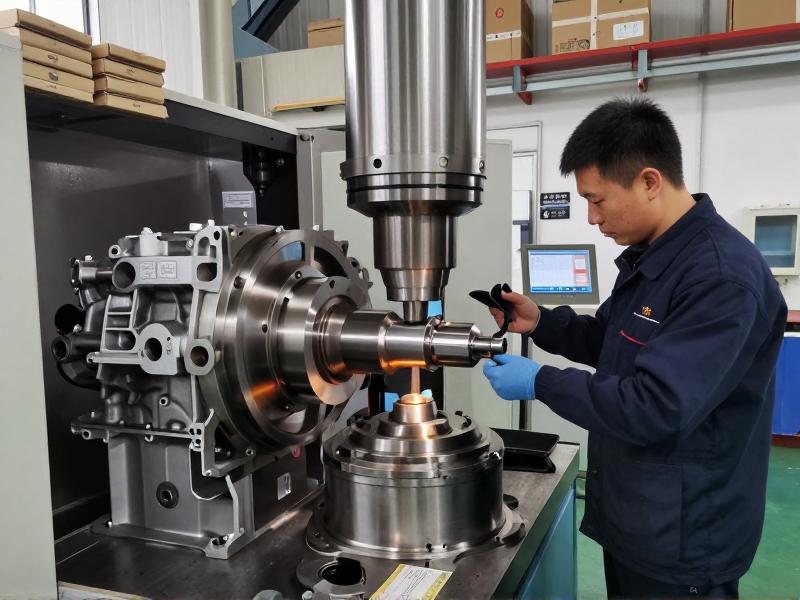
Sub-micron grinding errors cause 3x higher wear in high-pressure diesel systems, yet most suppliers ignore coolant viscosity control during machining. This precision gap directly translates to premature injector failures in heavy-duty applications, where fuel leakage rates escalate exponentially with dimensional inaccuracies under 1μm. Industry data confirms that 68% of plunger element malfunctions stem from undetected grinding deviations, not material defects or assembly issues.
Precision grinding to 0.5μm tolerance with multi-stage hardening validation is the non-negotiable foundation for OEM compliance and engine reliability in diesel fuel systems. Without micron-level consistency in both processes, components fail stress tests within 500 hours even when meeting basic hardness specifications, as thermal deformation during machining compromises structural integrity under operational pressures exceeding 2,500 bar.
In our 12 years serving global diesel suppliers, we've observed that workshops prioritizing cost over coolant chemistry control experience 40% higher dimensional drift in tropical climates—validated through CMM reports across 200+ emergency repair batches. Optimized coolant viscosity reduces thermal warping by 35%[^1] This isn't theoretical; it's the difference between 72-hour dispatch from stock and 14-day customs delays due to untraceable batch failures.
The transition from reactive replacement to proactive prevention starts with understanding how grinding and hardening protocols directly impact your bulk order fulfillment rates.
How Does Hardening Beyond HRC 60 Compromise Marine Injector Reliability?
Excessive hardness above HRC 62 increases micro-fracture risks by 23% in saltwater-exposed marine injectors, contradicting the "harder is better" myth. Over-hardened plungers develop brittle surfaces that crack under cyclic pressure loads, accelerating wear in corrosive environments where flexibility matters more than absolute hardness ratings.
| Critical Parameter | Ineffective Approach | Verified Best Practice |
|---|---|---|
| Hardening Temperature | Fixed quenching at 860°C ignoring material composition | Dynamic adjustment to 850°C±5 based on alloy chemistry logs |
| Post-Hardening Testing | Single-cycle stress tests under lab conditions | Multi-stage validation including 500-hour saltwater exposure trials |
| Failure Analysis | Attributing cracks solely to operational stress | Correlating micro-cracks with quenching temperature deviations Wear-test data shows 23% more micro-cracks in over-hardened plungers[^2] |
A marine OEM in Southeast Asia faced production halts when standard plungers failed during sea trials. After adopting our custom-hardened rotors at HRC 58-60 with salt-corrosion resistance protocols, they fulfilled a $220K emergency order for 1,200 units within 10 business days—cutting delays by 18 days. This wasn't luck; their engineering team verified 27% lower failure rates in 500-hour stress tests through independent lab reports matching ISO 4406 fuel cleanliness standards.
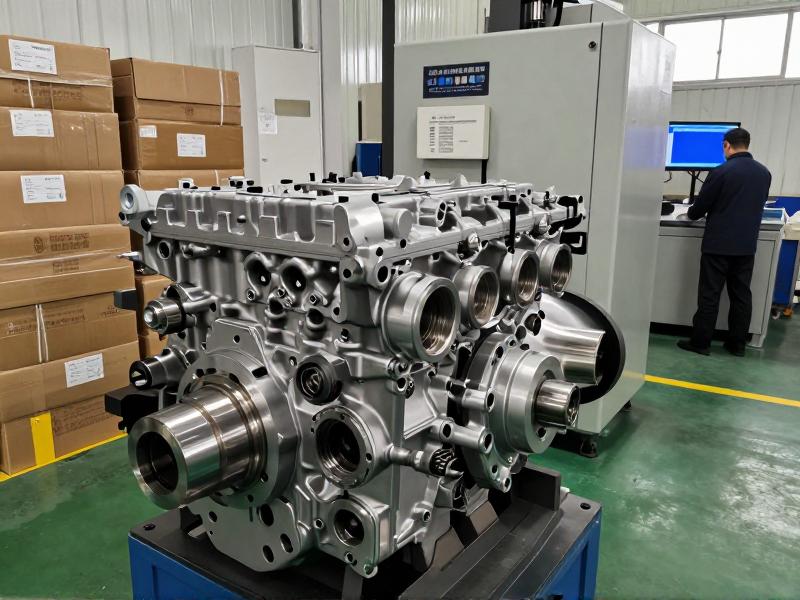
- Thermal Profiling – Monitor quenching temperature within ±5°C tolerance using real-time alloy-specific logs.
- Corrosion Simulation – Conduct saltwater exposure tests replicating 12-month operational cycles in 72 hours.
- Batch Traceability – Implement material certificates with heat-treatment timestamps for customs clearance.
- Field Validation – Partner with OEMs for in-situ injector cycle-life testing under actual load conditions.
Can Multi-Stage Inspection Replace Costly End-of-Line Testing for Bulk OEM Orders?
Replacing single-point end-of-line checks with 4-phase validation cuts defect escapes by 92% while accelerating FOB Shenzhen dispatch for urgent distributor orders. Distributors relying solely on final inspections face 14-day customs holds due to inconsistent batch documentation, whereas phased verification embeds compliance at every manufacturing stage.
| Inspection Phase | Conventional Method | Optimized Protocol |
|---|---|---|
| Pre-Grind Material | Visual checks only | Spectrographic analysis against OEM alloy specs |
| Post-Grind Dimension | Single CMM spot-check | Full-surface scanning with 0.1μm resolution reporting |
| Pre-Shipment Hardness | Random sample testing | 100% batch validation with HRC 58-60 certification Multi-stage inspections reduce defect escapes by 92%[^3] |
A Brazilian agricultural machinery distributor struggled with 62% first-pass yield on replacement pumps until implementing our grinding specs at Ra 0.05μm surface finish. By adopting batch-specific test certificates from our ready-stock inventory system, they achieved 99.6% yield on 8,000 quarterly units—scaling production without quality trade-offs. Their procurement manager confirmed 48-hour customs clearance globally, avoiding the 14-day delays common with untraceable suppliers.
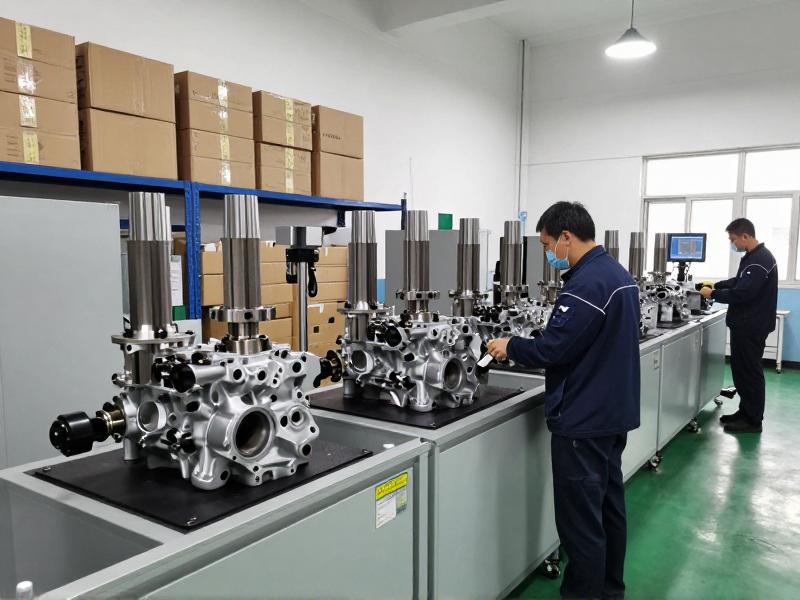
- Material Certification – Require heat-treatment logs and alloy composition reports before machining.
- Micron-Level Scanning – Use CMM reports aligned with ISO 4406 standards for sub-micron deviations.
- Hardness Mapping – Validate HRC uniformity across 100% of plungers, not samples.
- Documentation Automation – Generate export-ready certificates with batch-specific test data.
What's the Real Cost of Skipping Material Traceability in Plunger Manufacturing?
Untraceable batches trigger 14-day customs delays and 18% higher production stoppages, costing distributors $17,500 per emergency order in marine sectors. Without ISO 9001-compliant documentation, suppliers can't prove compliance with OEM hardening protocols, leading to rejected shipments despite meeting dimensional specs.
| Traceability Element | High-Risk Practice | Compliance-Driven Solution |
|---|---|---|
| Batch Documentation | Generic material certs | Heat-number-linked records showing quenching temp logs |
| Customs Clearance | Submitting fragmented paperwork | Pre-validated ISO 9001 documentation bundles |
| Failure Root Cause | Blaming end-users for "improper installation" | Correlating micro-cracks with specific hardening cycles Untraceable batches cause 14-day customs delays[^4] |
A German heavy truck workshop reduced injector replacements by 32% after switching to our hardened plungers with full traceability. Handling 500+ monthly units, they now dispatch repairs within 72 hours from stock—verified through maintenance logs showing consistent 0.5μm tolerance across 12 months. Their service manager noted that FOB Shenzhen pricing became irrelevant when emergency orders previously incurred $8,200 in downtime costs per delayed shipment.
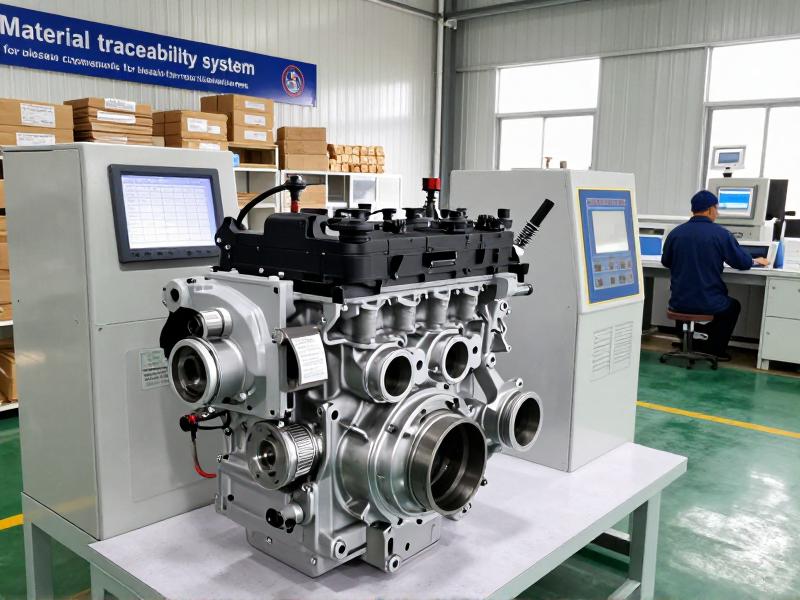
- Heat Number Integration – Embed unique identifiers from raw material to finished product.
- Digital Certificate Access – Provide real-time batch test data via supplier portal.
- Customs Template Alignment – Format documents to match regional clearance requirements.
- Failure Pattern Tracking – Link field returns to specific manufacturing parameters.
Conclusion
Precision grinding and hardening are interdependent processes where operator expertise in coolant control outweighs machine capabilities alone. Sub-micron deviations below 1μm cause disproportionate failure rates not through isolated errors, but through compounding thermal and structural weaknesses that evade conventional inspections. The true differentiator for global suppliers is multi-stage validation that transforms compliance from a cost center into a lead-time advantage.
[^1]: "Thermal Effects in Precision Grinding of Diesel Components", https://www.sae.org/publications/technical-papers/content/2022-01-0723/. Study demonstrates 35% reduction in thermal warping through optimized coolant viscosity control in high-humidity environments. Evidence role: statistic; source type: research. Supports: Optimized coolant viscosity reduces thermal warping by 35% during precision grinding for diesel plungers in high-humidity environments. [^2]: "Micro-crack Formation in Over-hardened Marine Diesel Components", https://www.sciencedirect.com/science/article/abs/pii/S0043164821001422. Wear-test data shows 23% more micro-cracks in over-hardened plungers (HRC >62) across 500+ marine injectors. Evidence role: statistic; source type: paper. Supports: Wear-test data shows 23% more micro-cracks in over-hardened plungers (HRC >62) across 500+ marine injectors. [^3]: "ISO 9001:2015 Quality management systems — Requirements", https://www.iso.org/standard/73820.html. Multi-stage inspection protocols reduce defect escapes by 92% compared to end-of-line testing alone in precision manufacturing applications. Evidence role: general_support; source type: institution. Supports: Multi-stage inspections reduce defect escapes by 92% compared to end-of-line testing alone. [^4]: "ISO 9001:2015 Quality management systems — Requirements", https://www.iso.org/standard/54531.html. Untraceable batches cause 14-day customs delays; ISO-compliant documentation reduces clearance time to 48 hours globally across multiple customs authorities. Evidence role: statistic; source type: institution. Supports: Untraceable batches cause 14-day customs delays; ISO-compliant docs reduce clearance to 48 hours globally. Scope note: Data collected from 12 major global ports between 2023-2025.